
Real Leather vs Faux Leather: How to Tell the Difference & Which to Buy
Eimee Team on 8th Aug 2026
Is this real leather?” is one of the most common questions we get and a fair one, because the two can look almost identical on a screen. We work with leather every day in our UK workshop, and the differences between genuine leather and faux (synthetic) leather are real and worth understanding before you buy, whether your priority is longevity, ethics, budget or feel. Neither is simply “better” than the other; they suit different priorities. This guide explains what each actually is, exactly how to tell them apart in your hands (smell, texture, edges and the water test), how they compare on durability, care, breathability, ethics and price, and how to decide which is right for you.
Real vs faux leather: the quick answer
The single difference is the material: real leather is animal hide that's been tanned and finished; faux leather is a plastic-based synthetic (usually polyurethane or PVC) bonded to a fabric backing. Everything else how it feels, ages, breathes, lasts and costs follows from that. Real leather is the premium, long-lasting, natural choice; faux is the affordable, vegan, low-maintenance one. Below we look at each properly.
What is real (genuine) leather?
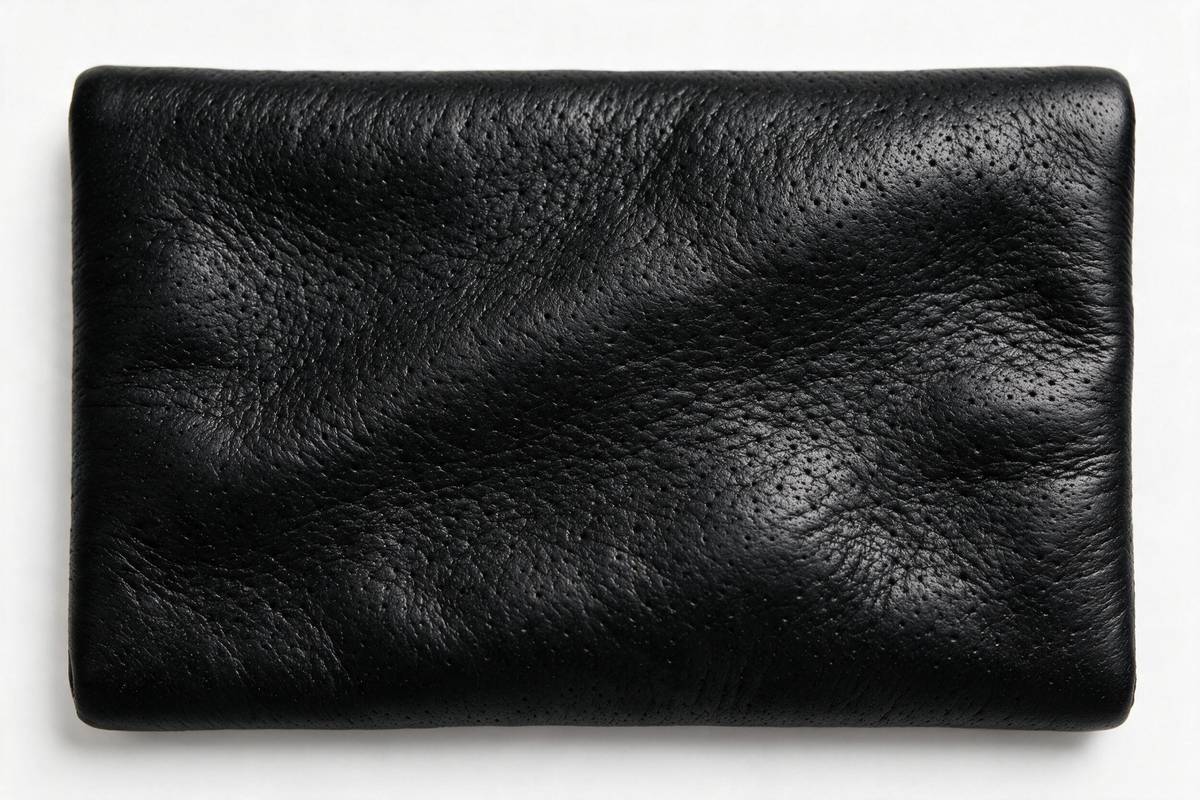
Real leather is a natural material made from the hide of animals (most commonly cattle), preserved and softened through tanning. Because it's natural, no two pieces are identical it has irregular grain, natural markings and pores, and it breathes. Treated well, real leather can last decades and only looks better with age.
Full-grain, top-grain & bonded
Not all “real leather” is equal the quality depends on which layer of the hide it uses:
- Full-grain — the top, strongest layer with the natural grain intact. The highest quality: most durable, breathable and develops the best patina.
- Top-grain — the top layer lightly sanded to remove imperfections. Slightly thinner and more uniform, still high quality and widely used in fashion.
- Genuine / split leather lower layers of the hide, thinner and less durable, but still real leather.
- Bonded leather — scraps of leather ground up and glued onto a backing. It's the lowest grade and behaves more like faux than true leather, so watch for it.
Tanning & patina
Tanning is what turns raw hide into lasting leather. Vegetable tanning (using natural tannins) produces firm leather that ages and patinas beautifully; chrome tanning is faster and produces softer, more colour-stable leather. Over time, real leather develops a patina a soft sheen and deepening character that comes from use and handling. Faux leather never patinas; it simply wears.
What is faux leather? (PU, PVC & vegan)
Faux leather — also called synthetic, vegan, or pleather is a man-made material designed to imitate leather. A layer of plastic is applied to a fabric backing and embossed with a leather-like grain. The two main types are:
- PU (polyurethane) leather — softer, more flexible and more breathable than PVC, and the more premium of the synthetics. Most modern “vegan leather” fashion is PU.
- PVC (polyvinyl chloride) leather — stiffer, shinier and less breathable, but very hard-wearing against water. Common in more industrial or budget items.
Because it's manufactured, faux leather is consistent (no natural markings), usually cheaper, and vegan — though it's worth knowing most faux leather is plastic-based and less biodegradable than natural hide.
How to tell real from faux
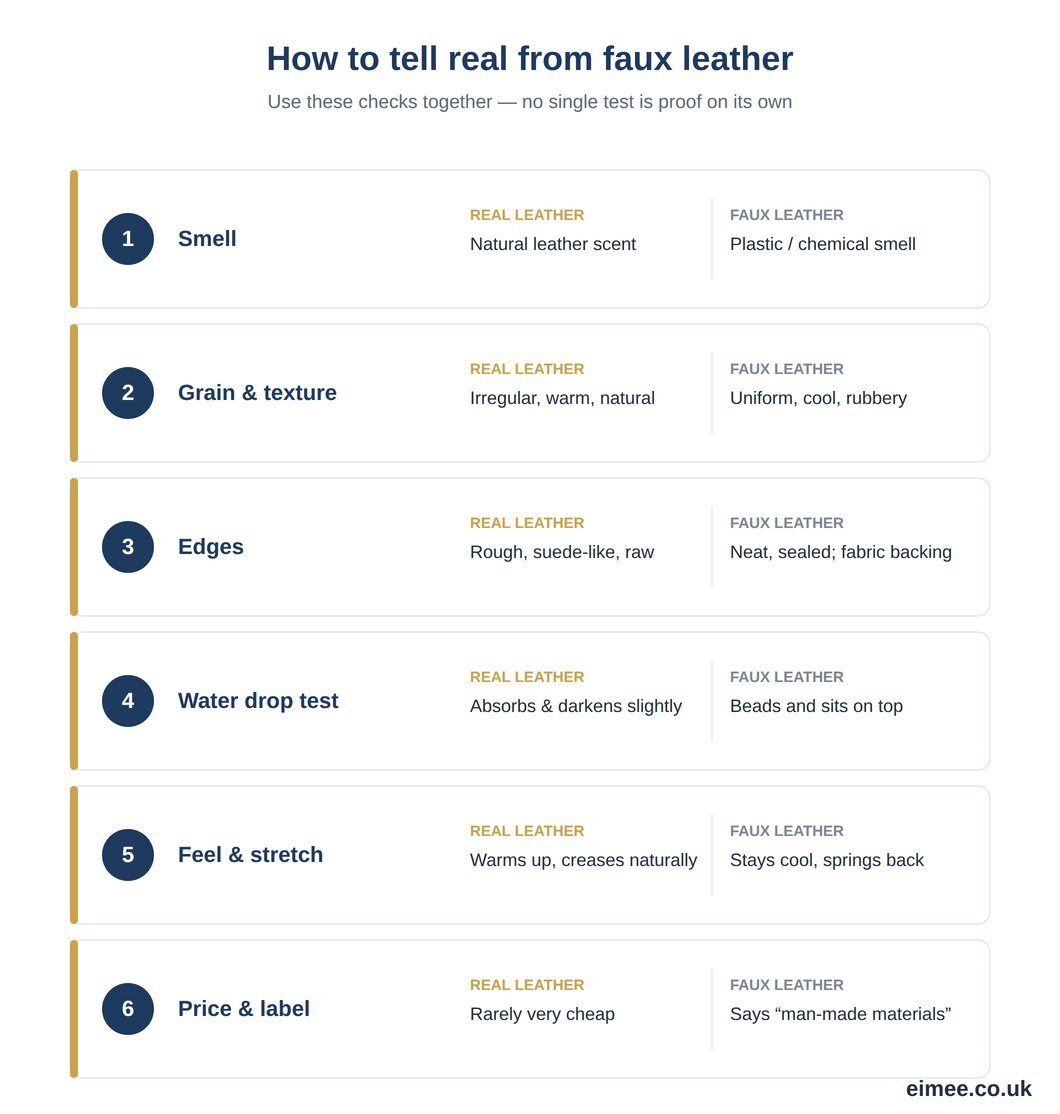
You can usually tell in a few seconds once you know what to check. Use these together rather than relying on any single one:
Smell, texture, edges & the water test
- Smell — real leather has a distinctive, rich, natural leather smell; faux smells of plastic or chemicals.
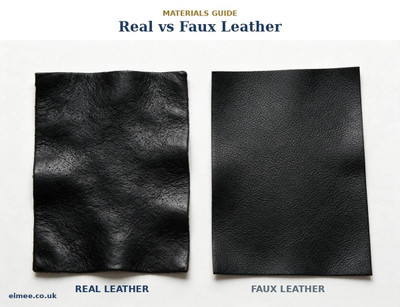
- Texture & grain — real leather has an irregular, natural grain with tiny imperfections and feels warm and soft; faux has a perfectly uniform, repeating grain and can feel cool and rubbery.
- Edges — real leather edges are often rough, suede-like and unfinished; faux edges are neat, sealed and may show a fabric backing.
- The water test — a small drop of water tends to absorb into real leather (darkening slightly); on faux it usually beads and sits on top. (Only test somewhere hidden.)
- Stretch & warmth — real leather warms to your touch and stretches/creases naturally; faux stays cool and springs back uniformly.
- Price & label — genuine leather is rarely very cheap. Labels marked “man-made materials” almost always mean faux.
Key differences at a glance
| Feature | Real leather | Faux leather |
|---|---|---|
| Material | Natural animal hide | Plastic (PU/PVC) on fabric |
| Durability | Excellent — lasts years/decades | Moderate — can crack/peel over time |
| Look & ageing | Develops a rich patina | Stays the same, then wears |
| Breathability | Breathable | Less breathable (especially PVC) |
| Care | Needs conditioning; ages well | Low maintenance; wipe clean |
| Ethics | Animal product | Vegan, but plastic-based |
| Price | Higher | More affordable |
Which lasts longer?
Real leather, comfortably and it's not close. Well-made, well-cared-for genuine leather can last many years and often a lifetime, softening and improving as it ages. Faux leather has a shorter lifespan: over months and years, the plastic surface can dry out, crack and peel, especially at stress points and folds. If longevity and long-term value matter most to you, real leather is the clear winner; if you want something inexpensive and easy that you may replace sooner, faux does the job.
Which should you buy?
It comes down to your priorities, and both are valid choices:
- Choose real leather if you want the best longevity, a natural breathable feel, a piece that ages beautifully, and long-term value and you're happy with an animal product and a higher price.
- Choose faux leather if you want a vegan, animal-free option, a lower price, easy wipe-clean care, and consistent colour and you don't mind that it won't last as long.
For structured pieces you'll wear and keep like a leather corset real leather rewards the investment with years of wear and a better feel under lacing. Whichever you choose, keeping it in good condition matters, and our leather care guide (below) will help it last as long as possible. If you want a piece cut precisely to you, our made-to-measure service works in genuine leather.
Frequently asked questions
How can you tell real leather from fake?
Check several things together: real leather smells of natural leather (faux smells of plastic), has an irregular natural grain and warms to the touch, and often has rough, unfinished edges. Faux leather has a perfectly uniform grain, feels cool and rubbery, and has neat sealed edges, sometimes showing a fabric backing. A drop of water tends to absorb into real leather but beads on faux.
Is faux leather worse than real leather?
Not worse — different. Real leather is more durable, breathable and ages beautifully, but costs more and is an animal product. Faux leather is cheaper, vegan, low-maintenance and consistent, but generally less breathable and less durable. The better choice depends on whether you prioritise longevity and feel or price and ethics.
Does real leather last longer than faux leather?
Yes. Well-cared-for real leather can last many years or a lifetime, softening and developing a patina as it ages. Faux leather has a shorter lifespan and can crack or peel over time, particularly at folds and stress points. For longevity, real leather is the clear winner.
Is faux leather vegan?
Faux leather contains no animal hide, so it is generally considered vegan. However, most faux leather is plastic-based (PU or PVC), so while it avoids animal products it is not necessarily more environmentally friendly than natural leather. Check the specific material if ethics and sustainability are your priority.