
Types of Leather Clothing: The Complete Guide
Posted by Eimee Team on 30th Sep 2026
Every kind of leather garment, and every kind of leather it can be made from, explained in one place. This is the guide we wish existed when we started.
Leather clothing is one of the oldest and most enduring things a person can wear, and also one of the most misunderstood. Two questions come up again and again. Which garment is right for me, and what kind of leather should it be made from. Most guides online answer only one of these, and usually for handbags rather than clothing. This guide answers both, properly, for real leather clothing worn by women and men.
We have split it into two parts. First, every type of leather garment, from the everyday jacket to the statement catsuit, with a short honest note on who each one suits and how to wear it. Second, every type of leather itself, from full grain down to faux, so you understand exactly what you are buying. By the end you will be able to walk into any leather purchase, online or in person, and know precisely what you are looking at. Let us begin.
- Part one: the types of leather garment
- Part two: the types of leather
- Real leather versus faux leather
- How to choose the right leather clothing
- Caring for leather clothing
- Why fit and made to measure matter most
- FAQs
The Types of Leather Garment
Leather clothing is a whole wardrobe, not a single item. Here is every main type, what sets it apart, and where to read more on wearing each one well.
Leather jackets
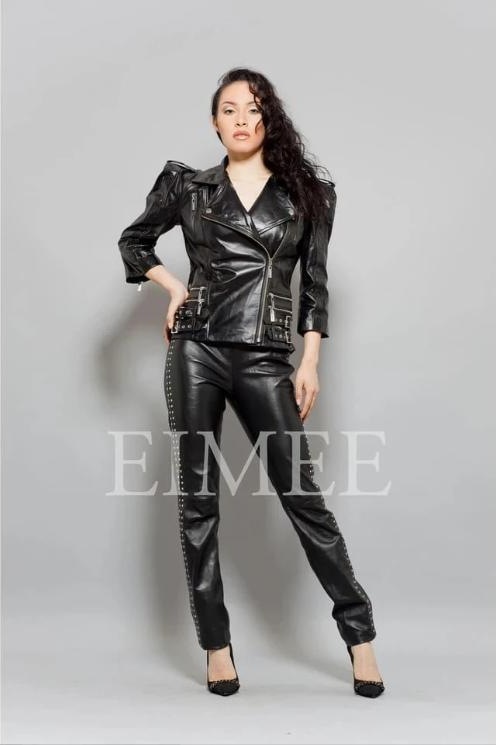
The one everyone starts with, and for good reason. A leather jacket is the most versatile leather piece you can own, from the classic biker and the moto to the tailored blazer and the longline coat. It works over almost anything and only looks better with age. Full styling in our guide on how to style a leather jacket, and the range across women's leather jackets and men's leather jackets.
Leather trousers, jeans and leggings
Three pieces people muddle constantly. Leather trousers have a proper waistband and tailored leg, leather jeans are cut like denim with five pockets, and leggings are pull on and stretchy. Together they are the most useful lower half in leather. See how to style leather trousers, and shop women's and men's leather trousers.
Leather catsuits
The boldest one piece there is, a close fitting second skin from shoulder to ankle. It flatters more than people expect once the fit is right, and needs almost nothing else to look complete. Learn the method in how to style a leather catsuit.
Leather jumpsuits and playsuits
The one and done outfit. A jumpsuit has full length legs with room to move, a playsuit is its shorter, more casual sister. Both are a single garment that dress up or down with just a change of shoes. Read how to style a leather jumpsuit and playsuit, and if you are unsure of the difference between these and a catsuit, our guide on catsuit vs jumpsuit vs playsuit clears it up. Browse women's leather jumpsuits and catsuits.
Leather skirts
From the mini to the midi and the tailored pencil, a leather skirt is one of the easiest ways to bring leather into everyday dressing. It pairs with a knit and boots in winter and a simple top in warmer months. See how to style a leather skirt and shop women's leather skirts.
Leather dresses
A leather dress is a genuine statement, whether a sleek shift, a figure hugging design or a two tone panelled piece. It carries an evening on its own and needs only a heel and one accessory. Read how to style a leather dress and see women's leather dresses.
Leather shorts
Underrated and surprisingly wearable. Leather shorts work bare legged in summer and over tights with boots in the cooler months, high waisted for shape or relaxed for ease. See how to style leather shorts and shop women's leather shorts.
Leather corsets
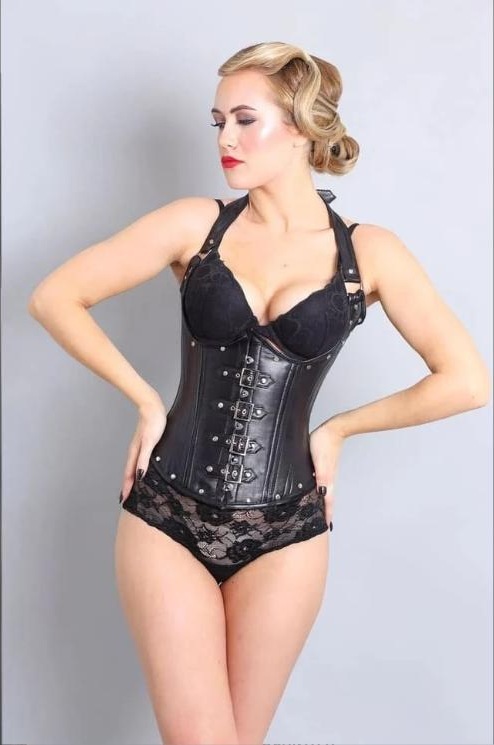
Where structure meets leather. A corset shapes the waist and can be worn as outerwear over a shirt, as a going out top, or as a foundation piece, for both women and men. This is one of the areas Eimee is best known for, with a deep range and detailed guides. Start with the leather corsets complete guide and the men's leather corsets guide, then shop women's corsets and men's corsets.
Leather waistcoats and boleros
The smart layer. A leather waistcoat sharpens an outfit the way a blazer does but with more edge, and a bolero adds a soft cropped cover for the shoulders. Both work over dresses, shirts and knits. Explore women's waistcoats and men's waistcoats and vests.
Leather kilts
A distinctive piece with real heritage, and something very few makers offer in genuine leather. A leather kilt is a bold, hard wearing garment that stands apart from anything else in a wardrobe. See the range of men's leather kilts.
At Eimee the pieces our customers ask for most sit at two ends of the same wardrobe. On the everyday side, leather jackets, trousers and skirts are the quiet workhorses that people reach for again and again. On the statement side, catsuits, corsets and dresses are the pieces bought for one particular night to be remembered. Knowing which end you are shopping from makes the whole decision simpler. Everyday leather garments reward versatility and a hard wearing grade, while a made to measure statement piece rewards a precise fit above everything else.
For a full breakdown, our guide shows you exactly how to style a leather shirt for day and night.
The Types of Leather
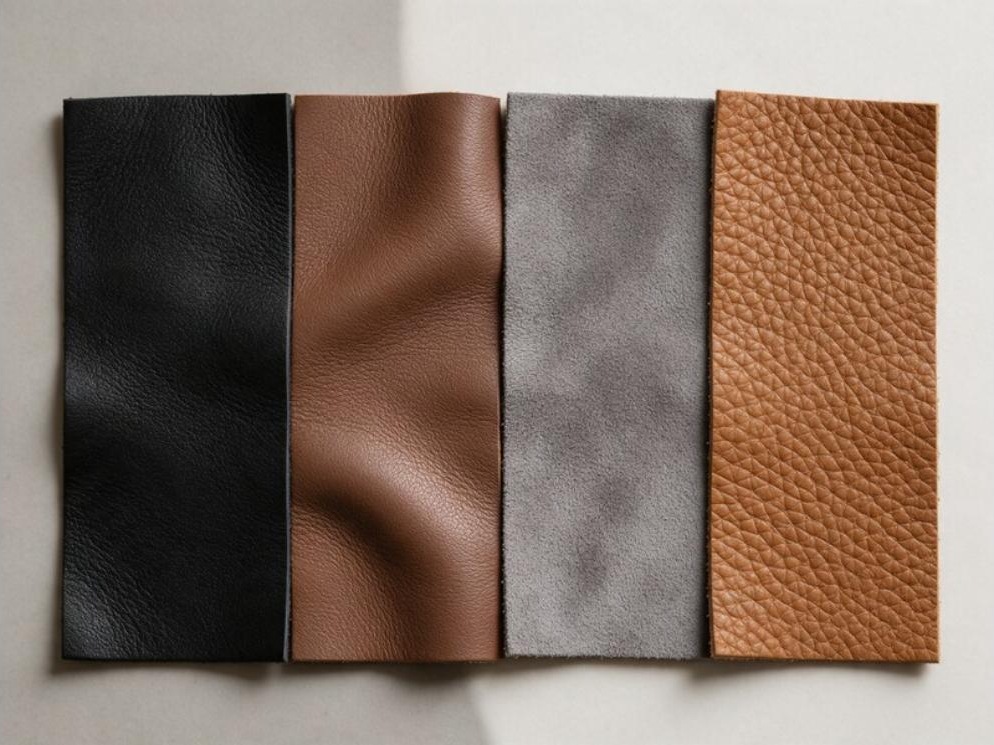
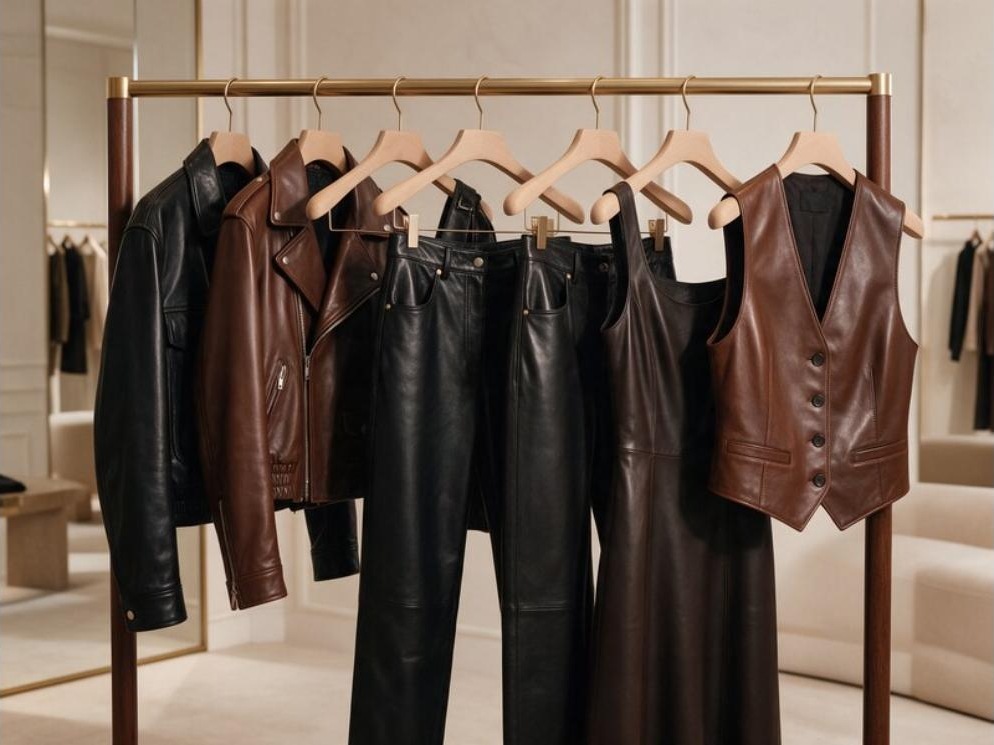
Now the part most people get wrong. The word leather covers a wide range of quality, and the grade matters far more than the price tag or the label. Here are the types you will actually meet, from best to budget.
Full grain leather
The highest quality there is. Full grain keeps the entire natural top layer of the hide, including its tight, strong fibres and small natural marks. It is the most durable leather, it ages into a beautiful patina rather than wearing out, and it is what serious leather clothing is made from. If you want a piece that lasts for years, this is the benchmark.
Top grain leather
The second highest grade, and the most common in fine leather clothing. The very top of the hide is lightly sanded and finished, which makes it a little softer and more supple than full grain while staying strong. This balance of softness and durability is exactly why it suits garments that need to move with the body. Most Eimee pieces are cut from soft top grain nappa lambskin for this reason.
Nappa leather
Not a different animal but a finish. Nappa describes soft, smooth, full or top grain leather, usually from lamb or goat, prized for its buttery hand feel. It is the leather you want against the skin, which is why it is used for catsuits, dresses and anything close fitting.
Lambskin
Leather from young sheep, and one of the softest and most luxurious you can wear. It is fine, light and beautifully supple, ideal for pieces where softness and drape matter. It rewards a little care, because that same softness makes it more delicate than heavier hides.
Goatskin and goat nappa
Soft, strong and hard wearing at the same time, goat leather has a natural pebbled grain and excellent durability for its weight. It is a brilliant all rounder for garments that need to look refined but survive real wear, such as skirts, kilts and jackets.
Genuine leather
This one surprises people. Despite the trustworthy name, genuine leather is a lower grade made from the layers beneath the top of the hide, corrected and coated for a uniform look. It is real leather, but it is not the same class as full or top grain, and it will not age as gracefully. Treat the label as a floor, not a promise.
Suede and nubuck
Both have a soft napped surface rather than a smooth one. Suede is made from the underside or a split of the hide, giving a velvety, casual finish. Nubuck is the top grain sanded to a fine nap, so it is more hard wearing than suede while keeping that soft touch. Both look wonderful and both need protecting from water and marks.
Aniline leather
Leather dyed all the way through with soluble dyes and given only a thin protective finish, so the natural surface and character show through. It is a premium, natural looking choice, and slightly less resistant to staining, which is part of its honest beauty.
Bonded and faux leather
The bottom of the range. Bonded leather is leftover scraps ground up and glued together, and faux leather is a plastic (PU or vinyl) made to imitate the real thing. Both look acceptable for a season, both lack the breathability and longevity of real leather, and both tend to crack and peel at stress points. More on telling them apart below.
How leather clothing is made
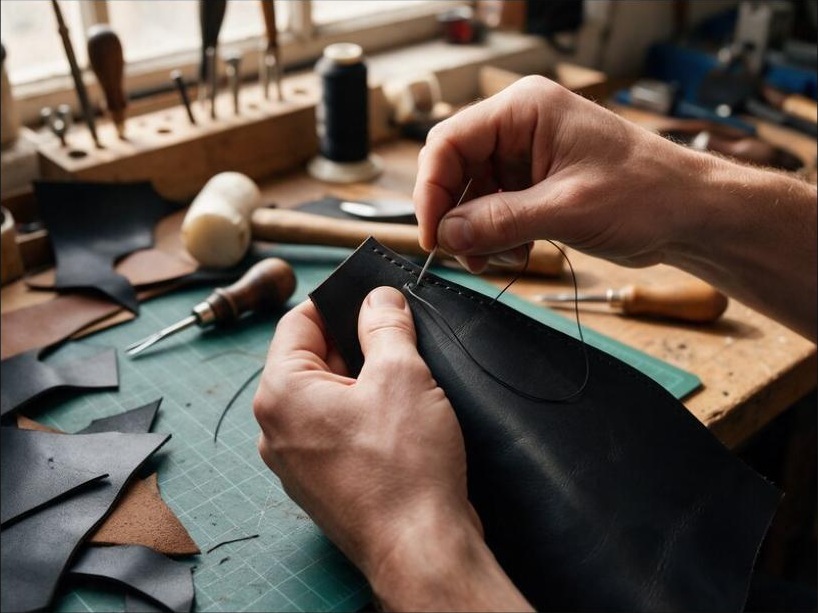
Understanding how a leather garment comes into being explains a lot about why quality and price vary so much. It begins with the hide, which is cleaned and then tanned to turn raw skin into a stable, wearable material. Vegetable tanning uses natural tannins and takes weeks, giving a firmer leather that ages beautifully. Chrome tanning is faster and produces the soft, supple leather most clothing uses. After tanning the leather is dyed, finished and graded, then a skilled maker cuts the panels, allowing for the way leather stretches in one direction but not the other, and stitches them together. A close fitting piece like a catsuit or a corset can involve many separate panels, each cut and joined by hand. This is why genuine handmade leather clothing takes time, and why it is not the same thing as a mass produced garment stamped out by machine.
Leather grades at a glance, best to budget
- Full grain is the strongest and most durable, and ages into a patina. The benchmark.
- Top grain is lightly finished, softer and supple, the sweet spot for clothing.
- Nappa and lambskin are soft finishes prized for close fitting garments.
- Goatskin is soft, strong and pebbled, a great all rounder.
- Genuine leather is real but a lower corrected grade, a floor rather than a promise.
- Suede and nubuck have napped surfaces, beautiful but in need of protecting.
- Bonded and faux are reconstituted or synthetic, short term only.
Leather thickness and weight, and why it matters
One detail almost no clothing guide mentions, yet it changes everything about how a garment feels. Leather thickness is measured in millimetres, and it decides whether a piece drapes softly or stands with structure. Very thin leather around 0.6 to 0.8mm is light and supple, ideal for dresses, catsuits and anything worn close to the body. Around 0.9 to 1.2mm gives more body for jackets and trousers, and heavier weights suit biker jackets and hard wearing pieces. Most Eimee garments are cut from soft top grain nappa lambskin at around 0.8mm, which is why they feel light and move with you rather than feeling stiff. When you buy leather clothing, ask about the weight, because the wrong thickness leaves a piece either flimsy or unwilling to move with you.
Leather colours and finishes
Leather is far more than black. The finish applied after tanning gives each piece its character:
- Aniline is dyed through with the natural surface visible, the most premium and natural look.
- Semi aniline adds a light protective coat, more resistant while still looking natural.
- Pigmented has a coloured surface coat, the most hard wearing and uniform.
- Patent is a high gloss lacquered finish for a bold, shiny look.
- Metallic and distressed are foil finishes and deliberately worn effects for character.
On colour, black is the versatile default, but real leather takes rich colour beautifully. Tan and brown read warm and everyday, oxblood and deep red make a statement, and jewel tones such as emerald add personality. A colour beyond black is often what makes a leather piece feel personal rather than expected.
Real leather versus faux leather
This is the single most important choice you will make, because it decides how long your piece lasts and how it feels to wear. Real leather breathes, moulds to your body, holds its shape, and lasts for years. Faux leather is cheaper up front, but it does not breathe, it cracks and peels at the seat, elbows and knees, and it usually needs replacing within a season or two. Over time real leather is almost always the better value, not the more expensive one. If you want to know exactly how to tell them apart in a shop or online, we wrote a full method in our guide on real leather vs faux leather, how to tell the difference.
How to choose the right leather clothing
With the garment types and the leather types clear, choosing becomes simple. Work through four questions in order.
- What is it for? Everyday wear points to jackets, trousers, skirts and shorts. A statement or an event points to a dress, catsuit or corset. Match the garment to the life you actually lead.
- How close to the body will it sit? The more fitted the piece, the more the leather and the fit matter. Close fitting garments want soft top grain nappa or lambskin, and they want to be cut to your measurements.
- Which leather grade? For anything you want to keep, choose full grain or top grain. Treat genuine, bonded and faux as short term only.
- Will it actually fit? This is the one most people skip, and the one that decides everything, which brings us to the last section.
Is leather clothing ethical and sustainable?
A fair question, and one worth answering honestly. Most leather is a by product of the meat industry, using hides that would otherwise be waste, so it turns something discarded into something that can last for decades. Its biggest environmental strength is exactly that longevity. A real leather jacket worn for twenty years replaces many cheap synthetic ones that crack and go to landfill within a season or two. Faux leather, despite the vegan label, is usually plastic based, does not biodegrade, and sheds microplastics as it wears. Neither option is perfect, but a single well made real leather piece that you keep for years is often the more responsible choice than repeatedly buying and binning imitation ones. Buying less and buying better is the honest sustainable path.
How much does real leather clothing cost, and is it worth it?
Real leather clothing costs more up front than high street imitations, and there is a genuine reason. The material itself is more expensive, and a handmade garment takes real hours of skilled work. But the figure that matters is cost over time, not cost on the day. A faux piece at a fraction of the price that lasts one season works out more expensive per wear than a real leather piece that lasts a decade and still looks good. Add the option to have it made to your measurements, so it fits properly and you actually reach for it, and the value gap widens further. Think of quality leather clothing as bought once, not bought often.
Caring for leather clothing
Real leather is an investment, and a little care keeps it looking better for far longer. The essentials are simple: let a piece breathe after wearing rather than sealing it in a bag, wipe marks with a barely damp cloth, condition now and then to keep the leather supple, and store on a padded hanger away from direct heat and sunlight. Suede and nubuck need a little extra protection from water. The full routine, garment by garment, is in our guide on how to care for leather clothing.
Why fit and made to measure matter most
Here is the truth that ties this whole guide together. The grade of leather and the type of garment both matter, but neither saves a piece that does not fit. Leather holds its shape rather than stretching to forgive a poor fit, so a beautiful full grain jacket in the wrong size still looks wrong, and a close fitting catsuit or corset lives or dies entirely on its measurements. This is why so much leather clothing gets returned, and why fit is the quiet secret behind every piece that looks expensive.
It is also why Eimee makes to measure. Every piece is handmade in real leather in our Gloucester workshop and can be cut to your own measurements rather than forced from a standard size run. If you take one thing from this guide, let it be this: choose real leather, choose the right grade, and then make sure it fits you properly. You can start that at made to measure.
A quick buying checklist
Before you buy any leather garment, run through these five questions:
- Is it real leather, and what grade? Choose full grain or top grain for anything you want to keep.
- What is the leather weight in millimetres, and does it suit the garment?
- Does the finish match the look you want, whether matte aniline, pigmented or patent?
- Will it actually fit, or can it be made to your measurements?
- Can you care for it properly to protect the investment?
Get those five right and you will rarely make a bad leather purchase again.
Eimee makes handmade real leather clothing in the UK, for women and men, available to your exact measurements. Browse the range for women and men, or read more in our leather fashion style guides.
Frequently asked questions
What are the main types of leather clothing?
The main types are leather jackets, leather trousers, jeans and leggings, catsuits, jumpsuits and playsuits, skirts, dresses, shorts, corsets, waistcoats and boleros, and kilts. Each suits a different occasion, from everyday wear to statement evening pieces, and all can be made in real leather.
What is the best type of leather for clothing?
Full grain leather is the most durable and the highest quality, while top grain, often as soft nappa or lambskin, offers the best balance of softness and strength for garments that move with the body. For close fitting pieces, soft top grain nappa lambskin is usually ideal. Genuine, bonded and faux leather are lower grades best treated as short term.
What is the difference between full grain and top grain leather?
Full grain keeps the entire natural top layer of the hide, making it the strongest and most durable, and it develops a patina over time. Top grain has that surface lightly sanded and finished, which makes it softer and more supple while sacrificing a little durability. Both are high quality; full grain lasts longest, top grain feels softer.
Is real leather clothing better than faux?
For longevity and comfort, yes. Real leather breathes, moulds to your shape, holds its structure and lasts for years. Faux leather is cheaper initially but does not breathe and tends to crack and peel at high stress points within a season or two, so real leather is usually the better long term value.
What is nappa leather?
Nappa is not a type of animal but a finish. It describes soft, smooth full or top grain leather, usually from lamb or goat, valued for its buttery feel. It is ideal for close fitting garments worn against the skin, such as catsuits and dresses.
Why does made to measure matter for leather clothing?
Leather holds its shape rather than stretching, so fit matters more than with any other fabric. A garment in the wrong size looks wrong no matter how good the leather is, and close fitting pieces like catsuits and corsets depend entirely on accurate measurements. Made to measure ensures the piece is cut to your body, which is why it flatters and lasts.
How do I care for leather clothing?
Let it breathe after wearing, wipe marks with a barely damp cloth, condition occasionally to keep it supple, and store on a padded hanger away from heat and direct sun. Suede and nubuck need extra protection from water. Done properly, real leather clothing lasts for many years.
How long does real leather clothing last?
With proper care, a well made real leather garment can last ten to twenty years or more, often improving with age as it develops a patina. This longevity is the main reason real leather usually works out cheaper per wear than faux, which tends to crack and peel within a season or two.
Can leather clothing get wet?
A little rain will not ruin real leather, but it should not be soaked. Blot it dry with a soft cloth and let it dry naturally away from direct heat, then condition it once dry. Suede and nubuck are more vulnerable and benefit from a protective spray. Never dry leather on a radiator, as heat makes it stiff and cracked.
What is the softest leather for clothing?
Lambskin is among the softest and most luxurious, prized for close fitting and drapey pieces, followed by soft nappa finishes on lamb or goat. These are the leathers you want against the skin, which is why they are used for catsuits, dresses and other fitted garments.
Is vegan or faux leather the same as real leather?
No. Faux or vegan leather is a synthetic, usually plastic based (PU or vinyl), made to imitate leather. It is cheaper and consistent in appearance, but it does not breathe, does not age well, and tends to crack and peel at stress points. Real leather is a natural material that breathes, moulds to you and lasts far longer.
Eimee makes handmade real leather clothing in Gloucester, United Kingdom, for women and men, available to measure. Explore every style guide in our leather fashion style guides.