
How to Care for Leather Clothing: Cleaning, Conditioning & Storage
Eimee Team on 9th Aug 2026
Good leather is an investment, and the difference between a piece that lasts five years and one that lasts fifty comes down almost entirely to how you look after it. We make and repair leather every day in our UK workshop, and the good news is that leather care is simple once you know the routine a little regular attention beats occasional heavy treatment every time. This guide covers everything: how to clean leather safely, how and how often to condition it, how to store it so it keeps its shape, how to tackle stains and water damage, how to prevent the big three enemies (cracking, fading and mould), and specific tips for corsets, jackets and trousers. Follow it and your leather will stay supple, rich and beautiful for years.
How to care for leather clothing (the quick routine)
Here's the whole routine at a glance most of it takes minutes:
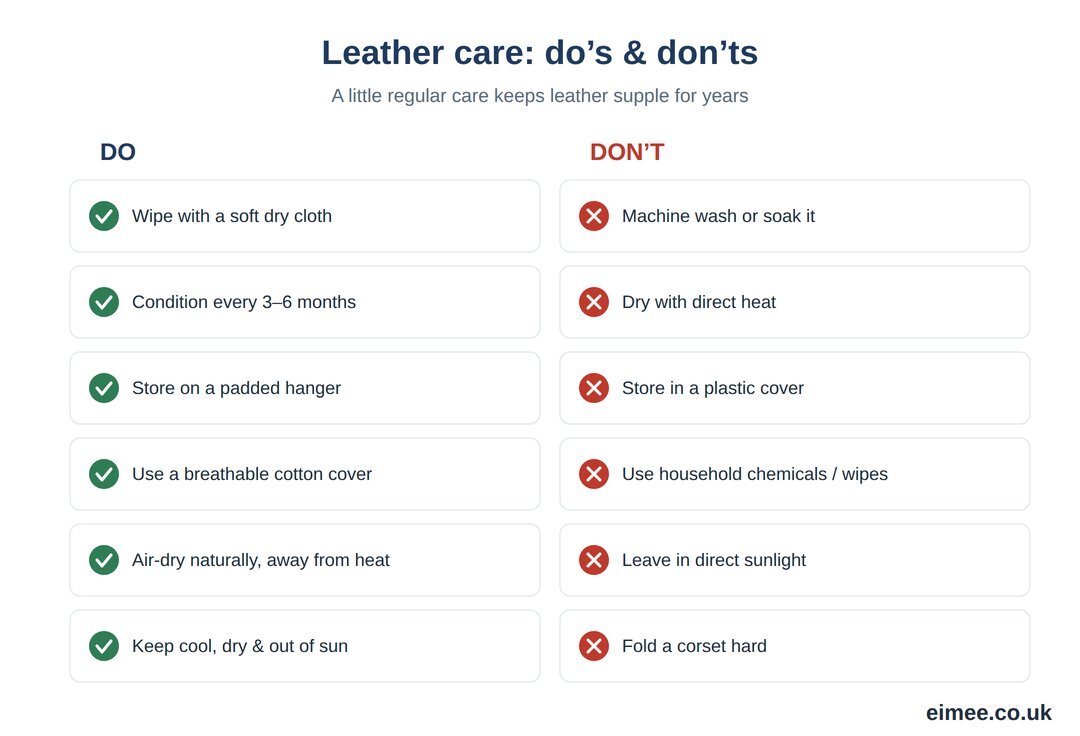
- After wearing — wipe with a soft dry cloth to remove dust and body oils, and let it air before storing.
- Every few weeks — a gentle wipe with a slightly damp cloth if it needs it.
- Every 3–6 months — condition with a proper leather conditioner to keep it soft and prevent drying.
- Always — store on a padded hanger, in a breathable cover, out of sunlight and away from radiators.
- Never — machine wash, tumble dry, or dry real leather with direct heat.
How to clean leather
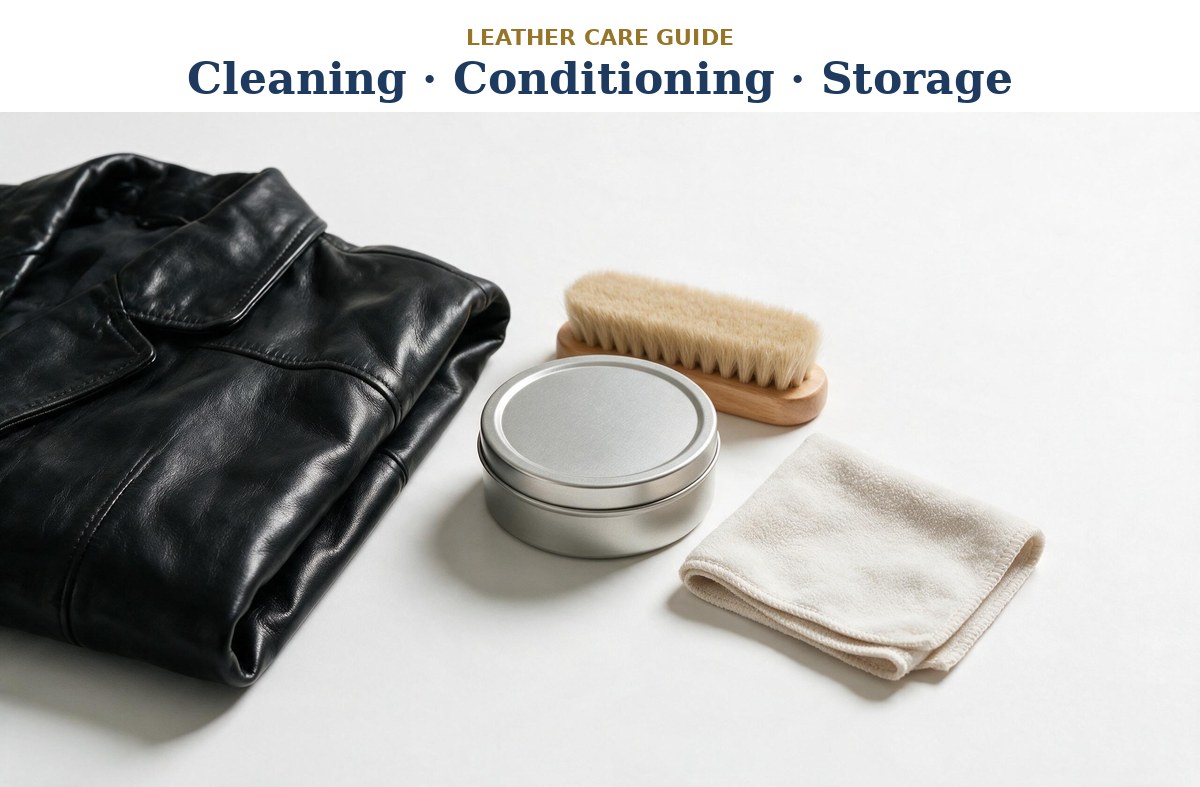
Leather should be cleaned gently and rarely over-cleaning does more harm than good. For everyday care, a soft, dry microfibre cloth removes most dust and marks. When it needs more:
- Wipe, don't soak. Use a cloth lightly dampened with clean water, wrung out well, and wipe in gentle circles.
- Use a proper leather cleaner for stubborn marks, applied to the cloth (not the leather) and tested on a hidden area first.
- Avoid household chemicals — no washing-up liquid, alcohol, baby wipes, bleach or all-purpose sprays; they strip and dry the leather.
- Dry with a clean cloth and let it air-dry fully before conditioning or storing.
Real vs faux cleaning
The two need slightly different handling. Real leather should be cleaned sparingly and always conditioned afterwards, because cleaning removes some of its natural oils. Faux leather is more forgiving it can usually be wiped clean with a damp cloth and mild soap and doesn't need conditioning, though it can still crack if neglected. Not sure which you have? Our guide on real leather vs faux leather shows you how to tell them apart, which decides how you should care for the piece.
How to condition leather
Conditioning is the single most important thing you can do for real leather. Leather is a natural material that loses moisture over time; conditioning replaces the oils, keeps it supple and stops it drying out and cracking. Here's how:
- Use a dedicated leather conditioner (a cream or balm made for garment leather). Avoid oils like olive or coconut, which can go rancid or darken leather.
- Apply a small amount to a soft cloth, then work it into the leather in thin, even circles.
- Test first on a hidden spot, as conditioner can slightly darken leather.
- Let it absorb for a few minutes to an hour, then buff off any excess with a clean cloth.
- Condition every 3–6 months, or sooner if the leather feels dry or looks dull.
Faux leather doesn't need conditioning its surface is plastic, not hide so save this step for genuine leather.
How to store leather
How you store leather matters as much as how you clean it poor storage causes creases, mould and misshaping. The rules:
- Use a padded or wide hanger for jackets and dresses so the shoulders keep their shape (wire hangers leave marks).
- Cover it breathably a cotton garment bag or old pillowcase. Never a plastic cover: plastic traps moisture and causes mould.
- Keep it cool, dry and dark — away from radiators, direct sun and damp. Heat dries leather; sun fades it; damp breeds mould.
- Give it room — don't cram leather tightly between other clothes, which creases and crushes it.
- Store corsets flat or rolled, never folded hard, so the steel bones stay straight (more below).
Removing common stains
Act quickly and gently the sooner you treat a stain, the better. Always test any method on a hidden area first.
- Water marks dab (don't rub) with a barely damp cloth to blend the mark, then let it air-dry and condition.
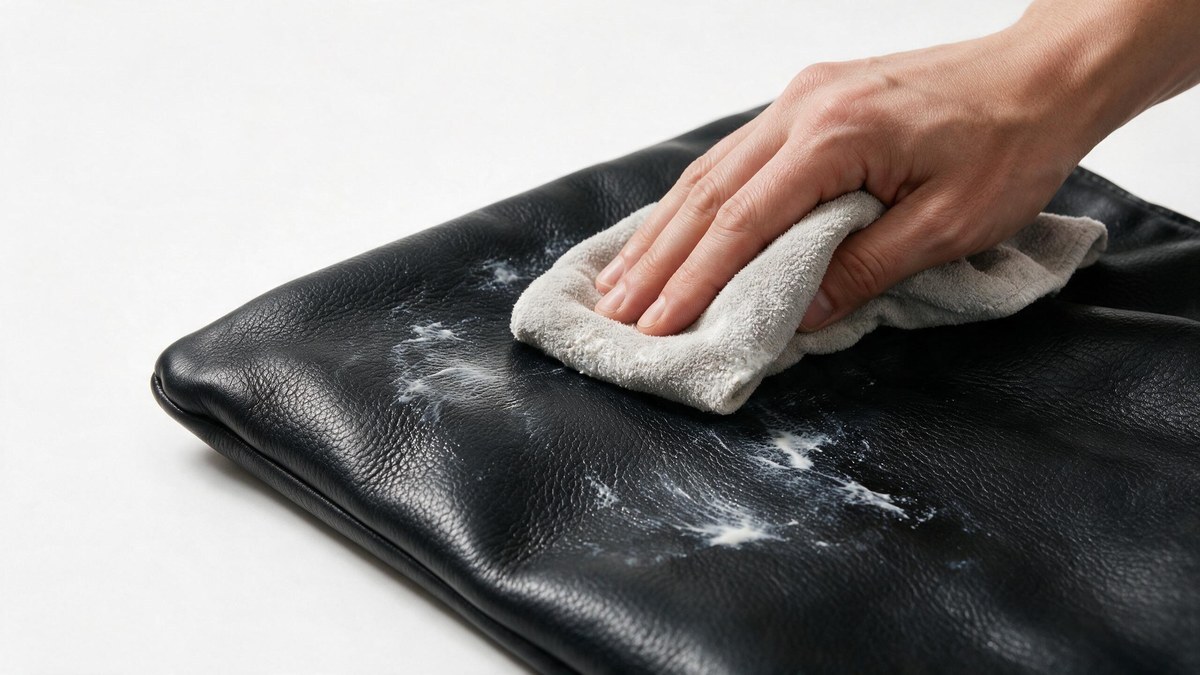
- Oil or grease blot excess immediately, then sprinkle cornflour or talc on the mark, leave a few hours to absorb, and brush off gently.
- Ink tricky; light marks may lift with a cloth barely dampened with a leather-safe cleaner. Heavy ink is best left to a professional.
- Salt marks (winter) wipe with a cloth dampened in a weak water-and-vinegar mix, then condition.
- Mud let it dry fully, then brush off and wipe. Never rub wet mud in.
For valuable or set-in stains, a specialist leather cleaner is safer than risking damage at home.
If leather gets wet
Wet leather is not a disaster if you dry it correctly:
- Blot excess water gently with a dry towel don't rub.
- Air-dry naturally at room temperature, away from radiators, hairdryers and direct sun. Fast heat drying is what causes cracking and stiffening.
- Keep its shape while drying hang a jacket on a padded hanger, or lightly stuff it to hold form.
- Condition once fully dry, because water draws out the leather's oils and it will need replenishing.
Preventing cracking, fading & mould
Almost all serious leather damage comes down to three preventable causes:
- Cracking — caused by leather drying out. Prevent it by conditioning regularly and never drying with direct heat.
- Fading — caused by UV light. Prevent it by keeping leather out of prolonged direct sunlight, in storage and on sunny days.
- Mould & mildew — caused by damp and poor air flow. Prevent it by storing leather dry, in a breathable (never plastic) cover, in a well-ventilated space. If mould appears, wipe it off gently with a cloth dampened in a mild water-and-vinegar solution, dry fully, and condition.
Care by item
Leather corsets
Always wear a thin liner or close-fitting top under a leather corset so sweat and body oils don't reach the leather this is the single best thing for its lifespan. Air it out between wears rather than cleaning often, wipe gently when needed, and condition occasionally. Store it laid flat or gently rolled, never folded hard, so the steel bones stay straight. Our leather corsets are built to last for years with this simple care.
Leather jackets
Hang on a padded hanger, condition a few times a year, and treat rain promptly by air-drying. Keep zips and hardware clean and dry to prevent rust marks on the leather.
Leather trousers & skirts
Hang by the waistband on a clip hanger to avoid knee creases, condition to keep them supple where they flex, and avoid sitting on rough or abrasive surfaces that scuff the surface.
Frequently asked questions
How do you clean leather clothing?
Wipe it with a soft dry cloth for everyday care, and for marks use a cloth lightly dampened with clean water (wrung out well) or a proper leather cleaner applied to the cloth, not the leather. Avoid household chemicals, soaps and wipes, never soak or machine wash real leather, and always let it air-dry and condition afterwards.
How often should you condition leather?
Condition genuine leather roughly every 3 to 6 months, or sooner if it feels dry or looks dull. Use a dedicated leather conditioner applied thinly with a soft cloth, testing on a hidden spot first. Faux leather does not need conditioning because its surface is plastic rather than hide.
How do you store leather clothing?
Store leather on a padded or wide hanger in a breathable cotton cover (never plastic, which traps moisture and causes mould), in a cool, dry, dark and well-ventilated place away from radiators and direct sunlight. Give it room so it does not crease, and store corsets laid flat or rolled to keep the bones straight.
Can you get water stains out of leather?
Often, yes. Gently dab the water mark with a barely damp cloth to blend it into the surrounding leather, let it air-dry naturally away from heat, then condition to restore the oils. Treat marks promptly and test on a hidden area first; set-in marks may need a specialist.
How do you stop leather from cracking?
Leather cracks when it dries out, so the key is conditioning it regularly (every few months) to replace lost oils and keep it supple, and never drying it with direct heat such as radiators, hairdryers or strong sun. Storing it properly and keeping it out of extreme dryness also helps prevent cracking.