
Waist Training with a Steel-Boned Corset: A Safe Beginner's Guide
Eimee Team on 7th Aug 2026
Waist training is one of the most misunderstood topics in corsetry. Some people expect a corset to melt inches off permanently in a fortnight; others have heard it's dangerous and best avoided altogether. The reality sits calmly between the two. We make and fit steel-boned corsets in our UK workshop, and we've guided plenty of nervous first-timers through their first few weeks. Done gradually, sensibly and with the right corset, waist training is a safe way to enjoy a temporary hourglass shape, better posture and for some a gradual, modest change in waist measurement over months. Done in a rush, with a cheap fashion corset laced far too tight, it's uncomfortable and pointless. This guide gives you the honest, safety-first version: what waist training really is, what results to expect, how to choose the corset, and a gentle week-by-week schedule to start with.
What is waist training? (quick answer)
Waist training is the practice of wearing a steel-boned corset regularly, over weeks and months, to gently and gradually shape the waistline. It works through consistent, comfortable compression not by crushing yourself in as tightly as possible. The corset holds your midsection in a smooth hourglass while you wear it, and, with regular sensible use, some people find their natural waist gradually reduces a little over time too.
The key words are gradual and comfortable. Waist training is a slow, patient habit, closer to a gentle fitness routine than a quick fix. A proper training corset is a structured garment with rigid steel bones and a strong busk, built to be worn for hours completely different from a stretchy "waist trainer" belt or a flimsy fashion corset.
Does waist training actually work?
Yes — with honest expectations. Here is what a corset genuinely does and doesn't do.
While you're wearing it: a well-fitted training corset gives an immediate, dramatic hourglass shape, smooths your silhouette under clothing and supports your back and posture. This effect is real and instant, but it is temporary it's the corset holding you in.
Over months of consistent wear: many experienced wearers report a gradual, modest reduction in their natural (un-corseted) waist measurement. This happens slowly, over 3–6 months or more, and varies enormously from person to person depending on body type, consistency and how much soft tissue there is to redistribute.
Realistic results (and myths)
Let's be straight about what to expect, because unrealistic promises are where people get hurt or disappointed:
- Myth: "You'll lose 4 inches permanently in two weeks." Reality: permanent change, where it happens at all, is gradual and measured in months, not days.
- Myth: "Tighter is faster." Reality: lacing too tight too soon causes discomfort, bruising and puts you off entirely. Gentle and consistent wins.
- Myth: "Waist training burns fat." Reality: a corset does not burn fat or replace healthy eating and movement. It shapes; it doesn't slim you through weight loss.
- Reality you can rely on: a beautiful temporary hourglass every time you wear it, better posture, and — for the patient and consistent — a gentle long-term change.
Choosing the right corset
The corset you choose is the single biggest factor in whether waist training is comfortable and effective. Before anything else, you need the correct size take a few minutes with our complete UK corset sizing guide so your training corset actually fits your body.
Why steel-boned, not fashion
This is non-negotiable for waist training. A steel-boned corset uses rigid flat and spiral steel bones and is built on strong, tightly-woven fabric (traditionally coutil). It can safely take the tension of regular lacing and hold its shape for years. A fashion corset the cheap kind with thin plastic bones — will buckle, twist and collapse under real waist-training tension, and can't shape you properly. If a corset costs very little and feels flimsy, it is not a training corset. Our women's leather corsets and men's leather corsets are steel-boned and made to be worn, not just admired.
Underbust vs overbust
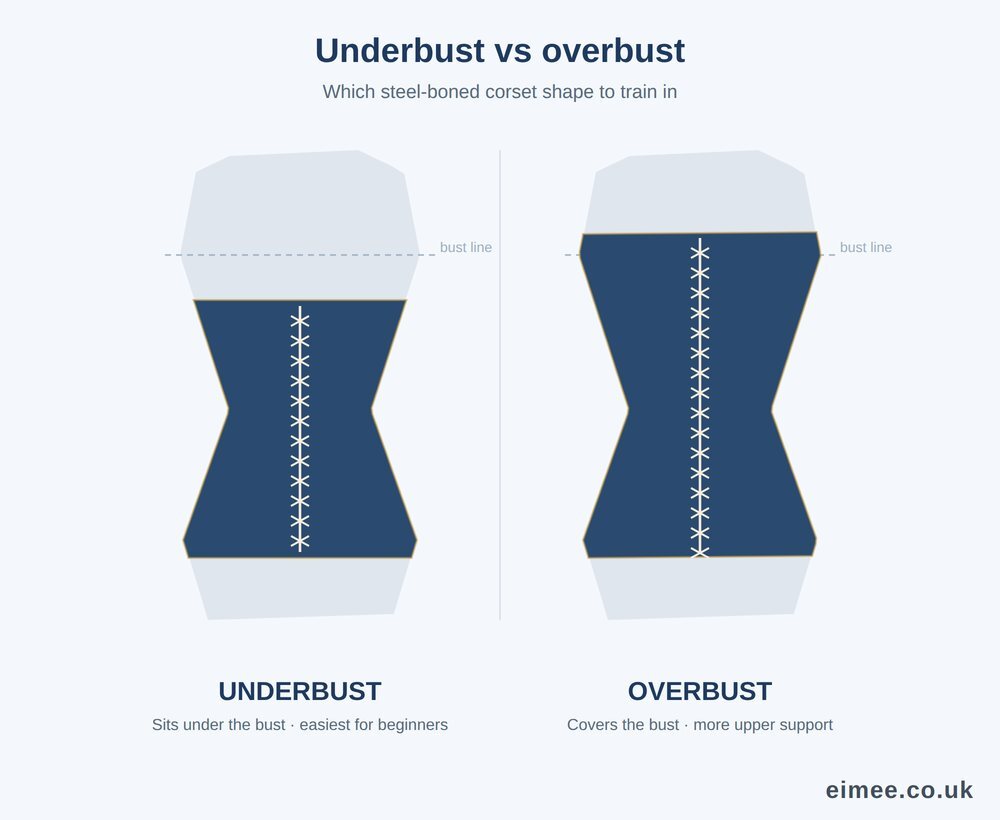
Most people find an underbust corset (which sits under the bust, around the ribcage and waist) the easiest and most versatile for training it's comfortable, discreet under clothing and lets you wear your own bra. An overbust corset covers the bust too and gives more support up top, but can be a little trickier to fit for training. For your first training corset, an underbust is usually the sensible choice. If you're often between sizes or have an unusual torso length, a made-to-measure corset will train far more comfortably than an off-the-peg one.
Seasoning your new corset
Before any real training begins, a new steel-boned corset must be seasoned broken in gently so it moulds to your body and the fabric and bones settle. Skipping this stresses the seams and can ruin a good corset. Seasoning is simple: for the first week or two, wear the corset loosely (nowhere near full closure) for short sessions of an hour or two, letting your body heat help it curve to your shape, and build up slowly. Always wear a thin liner or close-fitting top underneath. If you'd like the full method, including how to lace up correctly, see our step-by-step guide on how to put on a corset.
A beginner's schedule (week by week)
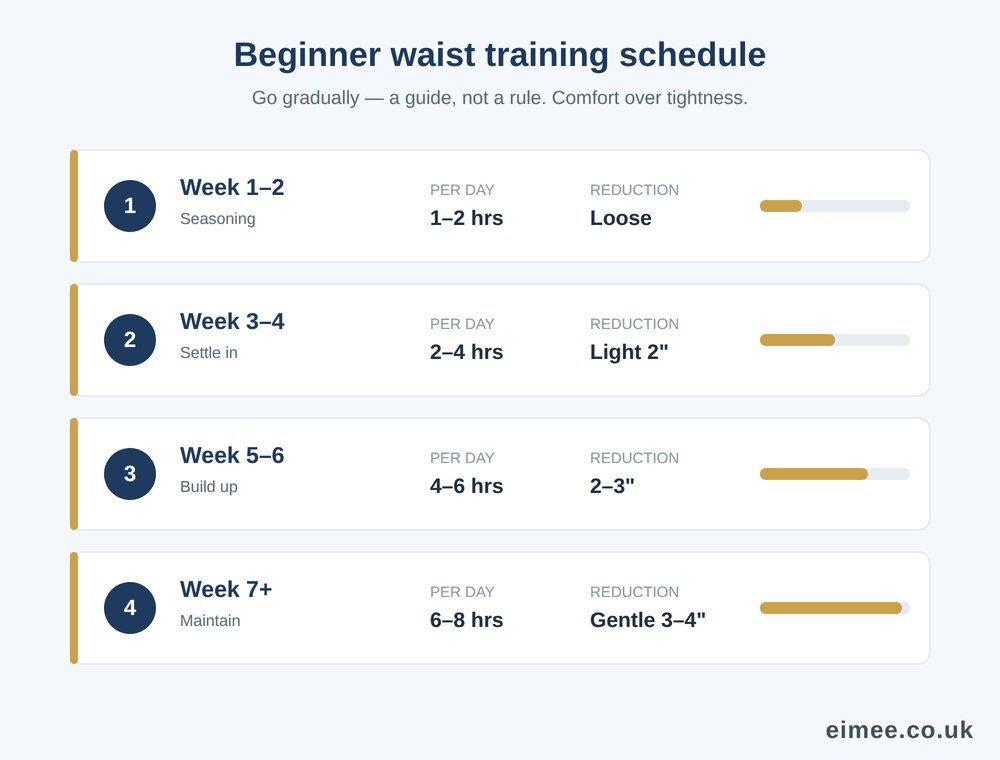
Here is a gentle starting schedule. Treat it as a guide, not a rule everyone's body and comfort are different, and there's no prize for rushing. If any week feels like too much, stay where you are for longer.
| Stage | Time per day | Tightness | Notes |
|---|---|---|---|
| Week 1–2 (Seasoning) | 1–2 hours | Loose — gentle snugness only | Let the corset mould to you. Never lace fully closed. |
| Week 3–4 | 2–4 hours | Light 2-inch reduction | Build comfort. Sit, stand and move to learn how it feels. |
| Week 5–6 | 4–6 hours | Comfortable 2–3 inch reduction | Consistency matters more than tightness now. |
| Week 7+ | 6–8 hours (if comfortable) | Up to a gentle 3–4 inch reduction | Only progress if it stays comfortable. Rest days are fine. |
Many people never go beyond a few hours a day, and that's perfectly fine you still get the shape and posture benefits. Consistency over weeks beats occasional extreme lacing every time. Take days off whenever you want; waist training is not meant to be relentless.
Safety & warning signs
A corset should always feel like a firm, supportive hug never a source of pain. Waist training is safe when you listen to your body and progress gradually. Stop and loosen the laces immediately if you notice any of the following:
- Sharp pain, pinching or bruising
- Numbness, tingling or pins and needles
- Difficulty breathing, or breathlessness
- Feeling faint, dizzy or nauseous
- Acid reflux or digestive discomfort
Sensible habits keep training safe: never sleep in a corset unless you're very experienced and it's been advised for you; don't eat a heavy meal laced tightly; loosen the laces for exercise; stay hydrated; and give your body corset-free days. If discomfort persists after loosening, take the corset off and rest. When in doubt, less tension and more patience is always the right call.
Supporting your results (core, posture & lifestyle)
A corset shapes you, but your results are strongest when you support them with healthy habits and, importantly, a corset is a complement to those habits, never a substitute for them.
- Move and strengthen your core on your corset-free time, so your own muscles support your posture too.
- Eat and hydrate normally. Don't use a corset to restrict eating that's neither healthy nor the point.
- Mind your posture out of the corset; training often makes people naturally sit and stand taller, which is a lovely side effect.
- Be consistent and patient. A little most days, over months, does far more than occasional heavy lacing.
Caring for your training corset
A corset you wear regularly needs a little care to last for years. Always wear a liner underneath so sweat and oils don't reach the corset this is the single best thing you can do for its lifespan. Air it out between wears rather than washing it often; steel-boned corsets should almost never be machine washed. Store it laid flat or gently rolled, never scrunched, so the bones stay straight. Unlace gradually when taking it off, and unfasten the busk with support. Treated well, a good steel-boned corset will happily train with you for a very long time.
Frequently asked questions
Does waist training actually work?
Yes, with realistic expectations. A steel-boned corset gives an immediate, dramatic hourglass shape and better posture while you wear it this part is temporary. With consistent, sensible wear over 3–6 months, many people also see a gradual, modest reduction in their natural waist. It shapes rather than burns fat, so it works best alongside normal healthy habits, not instead of them.
Is waist training safe?
Waist training is generally safe when done gradually, comfortably and with a properly fitted steel-boned corset. It should never cause pain, numbness or breathlessness those are signs to loosen or remove it. Season your corset slowly, build up wear time gently, take corset-free days, and don't over-tighten. If you have any medical condition or are pregnant, speak to a doctor first. This is general guidance, not medical advice.
How long should I wear a waist training corset each day?
Start with just 1–2 hours a day while seasoning a new corset, then build up gradually over several weeks to around 4–8 hours if it stays comfortable. Many people train happily at just a few hours a day and still enjoy the benefits. Consistency matters far more than long hours, and rest days are completely fine.
How long until I see waist training results?
You'll see a temporary hourglass the very first time you wear the corset. Any gradual change to your natural waist is slow typically noticeable after around 3–6 months of consistent, sensible wear, and it varies a lot from person to person. Anyone promising dramatic permanent results in days is not being honest.
Can waist training reduce my waist permanently?
For some people, consistent long-term waist training leads to a modest, gradual change in their un-corseted waist, but this is slow, varies by body type, and is usually best maintained with ongoing wear and healthy habits. It's not a guaranteed or dramatic permanent transformation think gentle, gradual and modest rather than instant and extreme.